



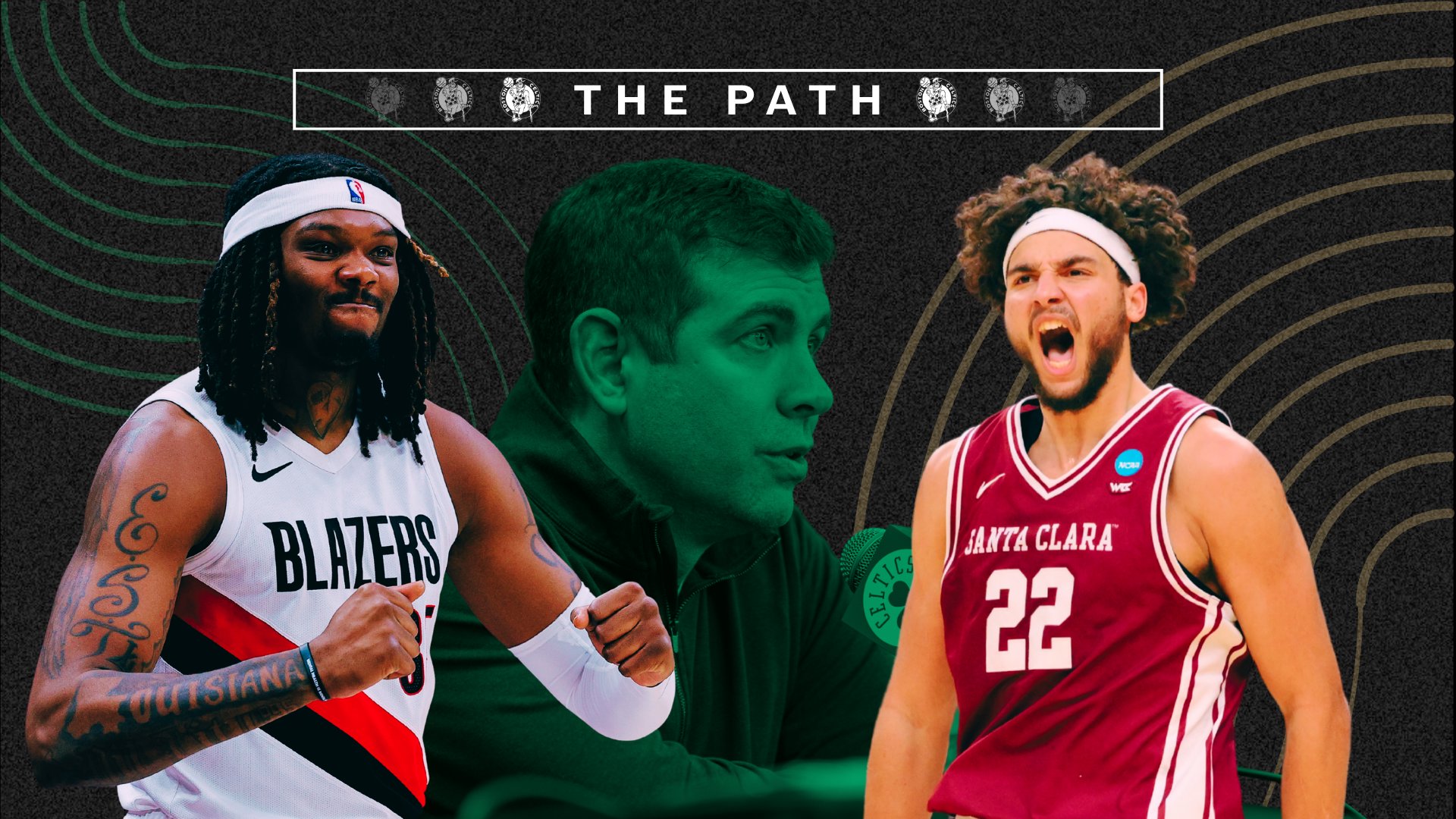

If at any point between, let’s say, March 6 and April 26, you had asked us to forecast what the summer of 2026 might look like for the Boston Celtics, we might have suggested a rather quiet offseason could be looming.
From the moment Jayson Tatum returned to parquet in early March until the night Boston took a 3-1 series lead over the Philadelphia 76ers, even the immediate future felt limitless. Drunk on Green Kool-Aid from an expectation-shattering regular season, we wondered out loud about Boston’s title chances this year, especially given Tatum’s absurd recovery, Jaylen Brown’s MVP-caliber season and the internal development of young talent thrust into bigger roles.
Then the Sixers won three straight games. Boston got bounced in Round 1. If that alone didn’t kill our buzz, watching the Knicks rip off 11 straight wins while Victor Wembanyama and the Spurs arrived at the Finals waaaaaaay ahead of schedule sure did.
Now, instead of that quiet summer, we’ve had basically a full month of pundits screaming about whether the Celtics should trade Brown for Giannis Antetokounmpo. That’s just the way things go in the NBA.
The playoffs have a way of thrusting teams into a harsher spotlight. And in the span of just 10 bad quarters, it became fair to wonder if more drastic measures are needed to get Boston back on the level of the league’s elite.
While we believe all options should be on the table for the Celtics this offseason, is there still a case for a quieter summer? For Part 1 of our annual “The Path” series, we’re examining an offseason where the Celtics don’t overreact to an early playoff demise and how that might give the team the best long-term chance to get back to the title stage.
We tiptoed into these small-tweak waters in late May, outlining how some financial responsibility this offseason could position the Celtics to take some much bigger swings in the summer of 2027.
That doesn’t mean punting on the 2026-27 campaign. What it means is banking heavily on the idea that the experience the Celtics gained this past season — combined with some upgrades at key spots — might be enough to position Boston as an East favorite without having to shake up the core. A chance to be a bit more aggressive with roster upgrades would loom next summer.
So what might a small-tweak summer look like? Let’s break it down:
Mission statement
Commit to bringing back the entire core of the 2025-26 team while hunting upgrades at key spots.
The Celtics could utilize exceptions to add talent, potentially scaling above the luxury tax line to start the season, but with an expectation that they would evaluate the roster in advance of February’s NBA trade deadline and dip back below the tax at that point in order to reset repeater penalties.
The path
The small-tweak summer leaves the Celtics banking that …
- A healthier Tatum, further removed from the Achilles injury that sidelined him for the first 62 games of the 2025-26 season, will reemerge as an MVP candidate, particularly given the strong numbers he posted throughout his return.
- Brown, fresh off a Top-six finish in MVP voting, will rebuild his chemistry with Tatum, combining to provide maybe the best 1-2 punch in the NBA if both are willing to sacrifice in small ways for the betterment of the team as a whole.
- Soon-to-be 32-year-old Derrick White shakes off this season’s shooting woes and finds the offensive consistency to match his sustained defensive dominance.
- Neemias Queta, hindered by foul trouble throughout Boston’s first-round fumble, finds motivation to make yet another leap and continues to be an analytical darling as one of the top bigs on this team.
- Payton Pritchard, before he puts pen to paper on a lucrative three-year contract extension, pledges again to embrace whatever role the Celtics need to be the best version of themselves.
- Boston identifies the young players it plans to lean heaviest into from the group of Hugo Gonzalez, Baylor Scheierman, Jordan Walsh, and Ron Harper Jr., and ensures consistent playing time to further accelerate their development.
From there, the Celtics would make a series of moves. Our wish list would include:
1. Sign center Robert Williams III utilizing the $15.1 million non-taxpayer midlevel exception.
Williams III played in 59 games last season, even as Portland delicately managed his minutes. He showed well in the postseason, even while jousting with Victor Wembanyama and the Spurs in the first round.
The combo of Queta and Williams III gives you a legitimate 1-2 punch at the center spot with Luka Garza there to eat up leftover minutes.
2. Trade up in the 2026 NBA Draft to select Santa Clara forward Allen Graves.
Utilize available assets to navigate the draft board with the goal of adding Allen Graves with a first-round pick and home-growing the next power forward on your roster.
We were already intrigued by the Draymond Green comps, then Graves said he’s been crushing tape of Naz Reid and Al Horford. Wow we’re sold this is the guy for Boston.
3. Consider high-upside trades utilizing a portion of the Anfernee Simons traded player exception.
The Celtics likely would be hard-capped at the first apron if they use the non-taxpayer MLE and can’t spend too richly if that is utilized. But they should be ambitious hunting a big guard or an established power forward to beef up the roster.
We’re calling Orlando to check on Wendell Carter Jr. given the Magic’s bloated cap sheet (though that would likely mean sitting out a full midlevel splurge). Can you tempt Detroit with some shooting in a quest to trade for Isaiah Stewart?
What it looks like
Instead of introducing elevated risk by moving on from championship-proven pieces, the Celtics give this core a chance to see what’s possible with a healthier Tatum and kick bolder decisions further down the road.
If it’s clear the Celtics remain a tier below the league’s elite, there are pathways to start a transition before February’s trade deadline. Regardless of how it plays out, the Celtics are well positioned in the aftermath to make some far bolder swings in the summer of 2027.

