


New Owner Syndrome is a very real thing, and we’ve seen plenty of billionaires make the sort of impulsive decisions that set their organizations back immeasurably. What’s ironic is that new Boston Celtics owner Bill Chisholm is seemingly doing the exact opposite, essentially putting all of his faith in president of basketball operations Brad Stevens to chart a path back to long-term title contention.
And yet there are still those who want to cry foul amid Boston’s admittedly jarring roster overhaul.
If you’re displeased about all of the talent that has gone out the door over the past two summers, we get it. The Celtics have had to make painful decisions about roster construction, first pivoting off key members of the championship core last summer, then trading Jaylen Brown for a questionable return last week. Stockpiling talent and raising banners is a lot more fun than trying to figure out how to navigate a restrictive new collective bargaining agreement designed to make it difficult for teams to stay atop the mountain.
But at a time when it would be easy to demand more immediate return on a $6 billion investment, Chisholm is allowing the Celtics to navigate the short-term pains that might afford the team the longest window to be a true championship contender. The team is steamrolling towards an opportunity to splurge next summer but has had to navigate sometimes unsavory choices to give themselves the best opportunity to maximize that moment when it arrives.
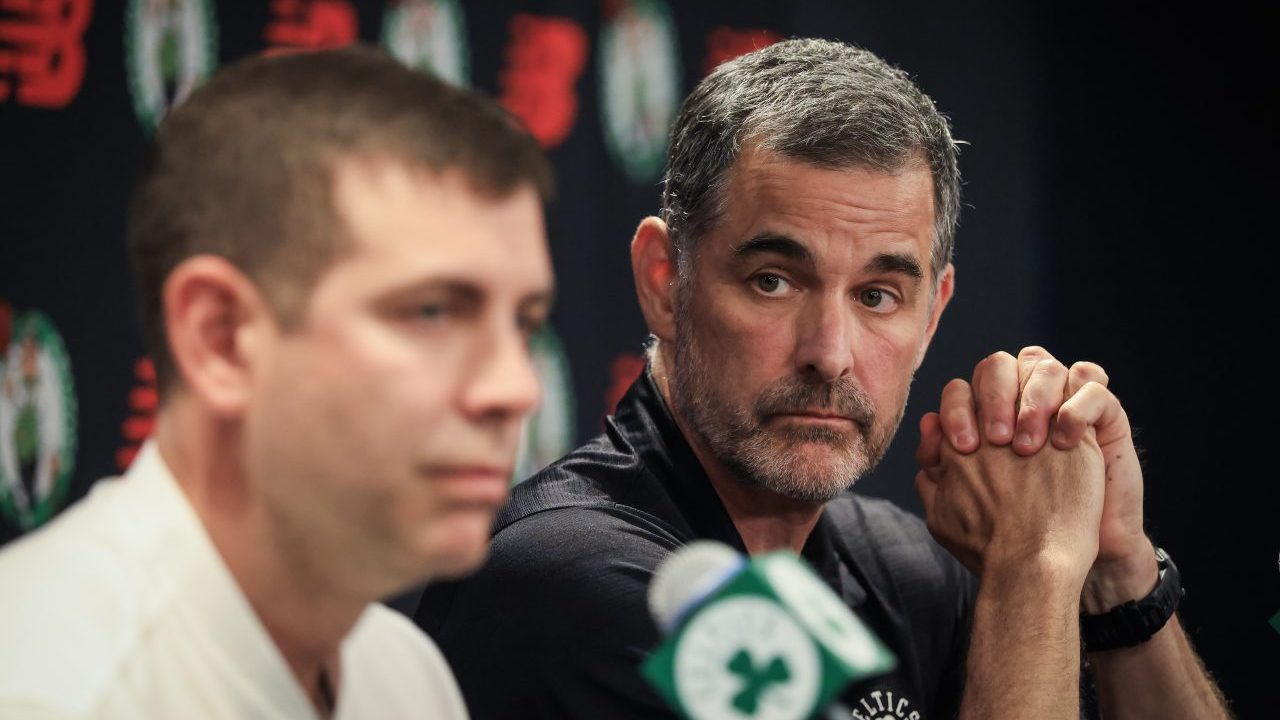
“I know people feel like, ‘Oh, there must be a smoking gun somewhere around the money.’ That’s just not what this is about,” Chisholm said at Monday’s press conference. “I can say it — and I’ll keep saying it — but I’ll also prove it to you. When we have the opportunity, we’re going to [spend]. And we’ve given ourselves the flexibility to do it now. So it’s fine to keep asking the question because I know we have to prove it. And we will.”
Even a few years ago, a team could simply open its checkbook and build a contender. But the latest CBA put in guardrails that don’t just punish teams financially for sustained spending, they basically cripple teams in terms of roster building. The NBA has entered a parity era.
The teardown of the 2024 championship roster in the summer of 2025 was happening regardless of who owned the Boston Celtics at that point. Boston got ahead of the new CBA in the summer of 2023, trading for Jrue Holiday and Kristaps Porzingis, the two highest-paid players on the team at a time before Jayson Tatum and Brown’s supermax extensions kicked in. Everyone knew the team had two seasons before the CBA taxman came knocking.
If Boston had repeated as champions in 2025, there could have been some consideration to lingering in the tax. But Tatum’s Achilles rupture — along with Porzingis’ health woes and a disappointing second-round exit — sealed the decision to start navigating some less desirable roster changes. We can certainly debate whether the Celtics should have been more willing to pay Luke Kornet’s next contract, particularly given how unexpectedly competitive the team was last season. But Boston clearly made the decision to get its finances in order and this roster overhaul was set in motion.
Yes, the Celtics saved $350+ million as part of the roster teardown. They went from a projected 2025-26 salary of $540 million with its title core intact and finished just below the $188 million tax line. The biggest gain wasn’t the financial savings but the ability to eventually reset the repeater tax penalties that were making the team prohibitively expensive in that moment.
If you want to quibble about last summer’s roster moves, you might suggest that Boston should have been more willing to move off Brown at that point. Maybe the trade packages would have been more enticing and Boston could have navigated a legitimate gap year, which could have also delivered a lottery player in a deep draft.
Instead, the Celtics waited until this summer to rip the Band-Aid with Brown.
Do we believe the Celtics could have gotten more in a Brown trade package? Absolutely. If we have one gripe it’s that Boston seemingly moved quickly to get a deal done early in the offseason when we’re not certain time would have diminished the return.
What really hurt the Celtics, though, were inflated expectations.
The expected return for Brown ballooned when Boston’s flirtation with Giannis Antetokounmpo became public. Even if you didn’t want the Celtics to push all in to get Antetokounmpo, you were conditioned to believe a top 10 player might be obtained in any Brown deal. That largely ignores that Boston would have had to include multiple first-round picks and young talent to entice Milwaukee to take its offer.
The expected return for Brown got further inflated when an older Kawhi Leonard and a much younger Walker Kessler each recouped two unprotected first-round picks and additional swaps as part of their hauls. It was reasonable, then, to expect that Brown, at age 29 and coming off a top six finish in MVP voting, would fetch a greater ransom.
It didn’t happen. Blame the contract. Blame the analytics. Blame Boston’s unwillingness to wait out the process. It’s fair to scrutinize whether the team could have better navigated the process.
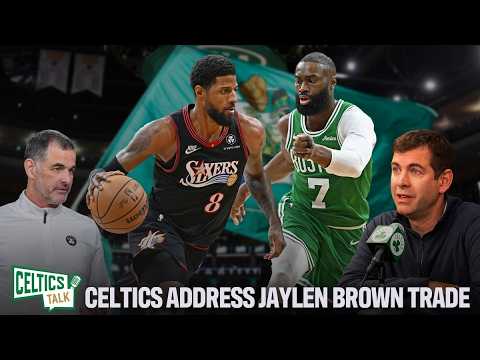
But we don’t quite understand the argument against ownership here. The Celtics, whether they traded for Antetokounmpo or George or any other superstar, were still paying $50+ million in any star acquisition. George, with a player option in 2027-28, has more available avenues to build the next iteration of this team, whether that’s flipping his deal in a quest for Tatum’s next running mate or trying to entice him to decline next year’s option in favor of a lower-money, longer-term extension.
That’s why “optionality” became the buzzword on Monday.
What’s clear from Stevens’ explanation is that this wasn’t just about Brown’s money or the total roster cost. It was about the amount of usage the Tatum/Brown combo consumed under this current roster construct, and certainly a reflection that the team believed it simply could no longer be a championship-level team with that combo.
The Celtics could have further slashed spending this year while waiting for the repeater penalties to reset. Instead, they signed Mitchell Robinson utilizing the midlevel exception. Boston is still lingering above the luxury tax line, and Chisholm noted that Stevens still has the green light to spend this year if it can improve the team.
There are limits to what Boston can spend this summer, particularly if the ultimate goal is to reset the repeater penalties. The Celtics are already hard-capped at the first apron after using the MLE. They could still flip George — and their new bounty of picks — if a new disgruntled star emerged on the market. But the plan for now is to evaluate how this team looks as currently constructed and ponder in-season options. The most likely outcome is ducking the tax again in order to set up a bigger splurge in the summer of 2027.
We’ve dubbed it the slingshot. Two years of pain points will allow Stevens the sort of flexibility to best build a true title contender. Boston had no clear path to tinkering on the margins around a Tatum/Brown core. Stevens’ challenge is putting the best possible pieces alongside Tatum.
That process has already started. The Celtics, having leaned heavier on player development in recent years, are locking up in-house talent. They’ve already inked starting center Neemias Queta to a long-term extension. Payton Pritchard could get his own extension later this summer. Ron Harper Jr. got a new deal this offseason as well. There is a lot of hope for what Hugo Gonzalez and Baylor Scheierman, still on their rookie deals, can contribute moving forward.
Stevens noted how recent champions like Oklahoma City and New York built deep rosters with diversified salaries. Those teams will soon feel the wrath of the second apron, with New York already letting Robinson walk after its title season.
Why does resetting the repeater matter? The Celtics can stomach, say, a $200 million roster in both the 2027-28 and 2028-29 seasons without fear of both basketball and tax penalties. Unlike the summer of 2025, every dollar won’t count 4.5-times as much given their recent spending. The Celtics still have to be braced to work themselves back down in the summer of 2029, but that’s just the new cycle under this CBA. Two years up, two years down — if you’re lucky.
Two years is an eternity in the NBA, anyhow. Two years ago, the Celtics were on duck boats. Now, only two of their top six players remain under contract in Tatum and Derrick White.
Stevens admitted none of this stuff is fun for fans. No one wants to trade established superstars like Brown for optionality. But there is a new set of rules the NBA is operating under. You either navigate the CBA or get steamrolled by it.
Stevens and Chisholm are betting on the team’s braintrust. They are betting that other teams will be forced into second-apron binds that might allow an opportunistic team like Boston to pounce.
Chisholm has promised to spend when the time is right. The time has not been right in either of his first two years at the helm. If the team doesn’t splurge next summer, we can all cry foul. Save your private equity conspiracy theories until then.
In Boston, we demand accountability. On Monday, at basically the very first moment that Stevens and Chisholm could tackle questions about the controversial Brown swap, the two parked themselves at a podium in the Auerbach Center and answered questions for 45 minutes.
We fully expect some will read this and decry how we’re pushing the team’s agenda. Take the time to study the CBA and you’ll recognize that there are few savory pathways to building a title contender.
We’re not even certain the Celtics made the right choice in moving Brown. But we at least understand the reasoning. As Stevens made clear on Monday, only time will tell if they’ve chosen the right path.
Chisholm noted it comes down to “trusting our process.” That’s maybe not the best choice of phrase after a deal involving the Philadelphia 76ers.
But one thing is certain: He’s putting all his trust in Brad Stevens. Celtics fans might have to do the same.