



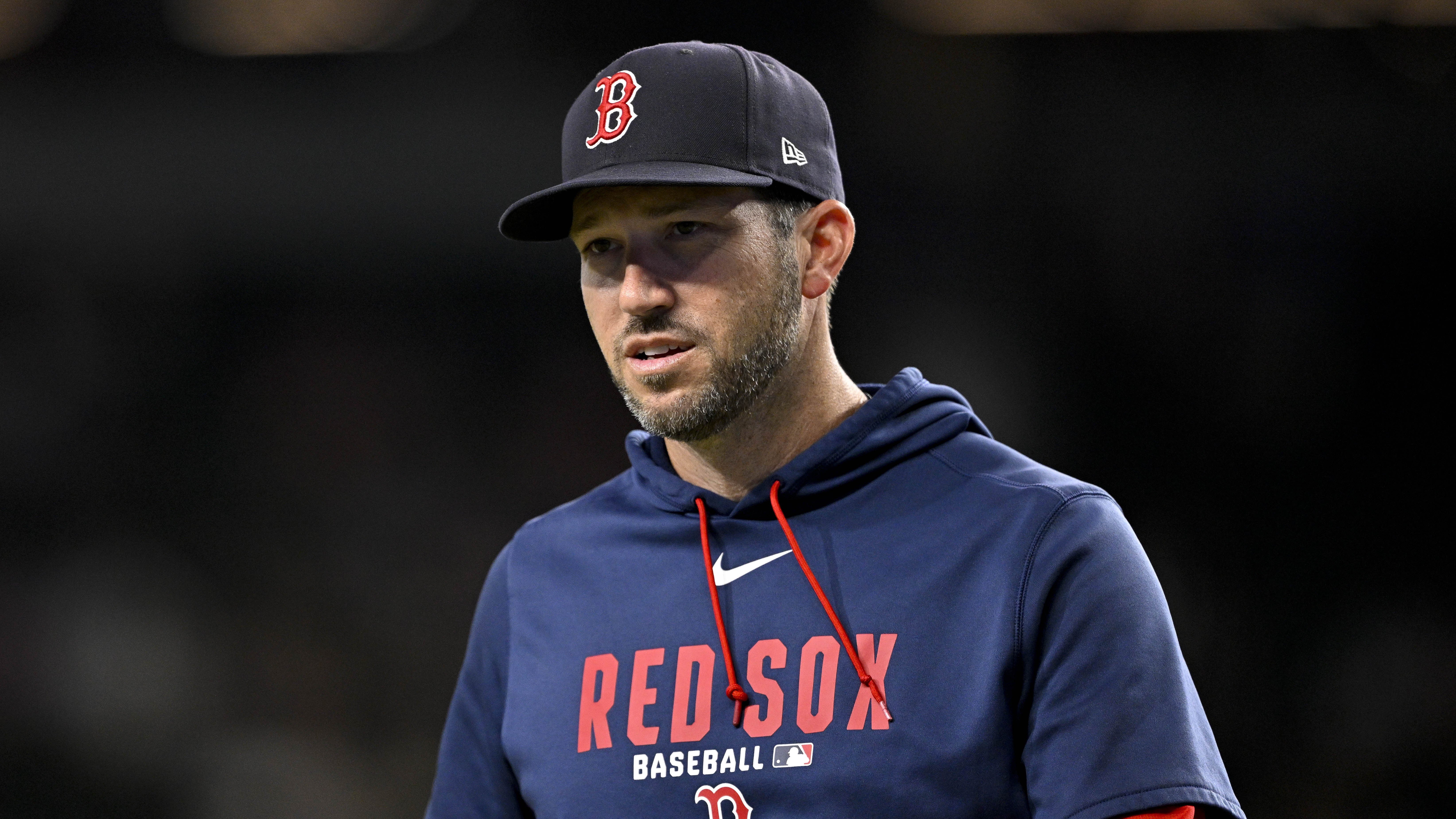

In Game 1 of the Wild Card Series, manager Chad Tracy pulled starter Payton Tolle with two outs and nobody on base in the fifth inning, opting to utilize Erik Miller to face Ben Rice. The Yankees’ DH turned Miller’s third pitch around for a 423-foot shot to center field, doubling New York’s lead to 2-0.
A night later, in Game 2, Tracy once again strode to the mound with two outs in the fifth inning, this time with runners on the corners. Tracy took the ball from veteran starter Sonny Gray and gave it to … Miller. Cody Bellinger sent Miller’s third pitch into right field, plating a run to once again turn a 1-0 lead into a 2-0 advantage.
Considering that Tracy pulled both starters long before their pitch counts had run high, and considering he went to the same reliever who was extremely ineffective in September after being acquired in a high-profile trade at the deadline, many observers simply assumed that chief baseball officer Craig Breslow played a role in dictating when and where the lefty reliever was going to be used.
Speaking at an end-of-season press conference on Monday, though, Tracy fought vehemently to take the blame for the decisions.
“I’ll answer that,” Tracy said when Breslow was asked about how much input the front office had on in-game decisions. “None. The decisions are mine. We have information just like all the other 29 teams have information. Everybody has that. But as far as, and I’ve said this before, like, since I’ve been here, do I sit in the office and talk through who’s available — you know, throughout the entire season — who’s available today, what’s the best way to deploy them, who’s down? Every single day you do that. But not one time since I’ve been here has anybody scripted a game, has anybody told me use this number right here to decide in this inning.
“Those decisions, they’re mine,” he continued. “So as far as that specific one, my decision, that didn’t — obviously didn’t go great. That falls on me. But there is nothing — do we have data analytics? Of course we do. Everybody does. Is somebody standing there pushing me saying you need to do this, this, this and this? Absolutely not.”
While Tolle — a rookie — spoke diplomatically both after Game 1 and Game 2, Gray was much more direct.
“I think I’m the best pitcher in the American League going through the order the third time. I think that’s a fact,” Gray told reporters after the season-ending loss. “I would have liked to been trusted in that moment.”
Gray, who’s set to become a free agent, was asked if he’d like to play in Boston again next season. His answer of “I don’t know” spoke volumes.
Tracy denied having any issues with Gray, despite the decision to pull him after just 70 pitches and one run allowed.
“I didn’t suspect most starters, especially in that case, that guys are going to be happy with being pulled. I thought he answered the questions that were asked of him in a very professional manner. And yes, I have had a chance to talk to him,” Tracy said. “The relationship there is good.
“Do I think he was wanting to stay out there? Quite obviously. But five months of relationship-building with players, and I think there’s some things that get painted sometimes like that that’s stained it or ruined it. It’s like, no, I have a very good working relationship with him and I’ve had numerous conversations with him throughout the course of the year. But yeah, I was able to talk to him. It’s in a fine place, while also understanding his feelings on it.”
When questioned about whether his decisions are based on a feel for the game or raw data, Tracy offered a bit of a confusing response. The first-time manager argued that he didn’t pull Gray out of concern for the pitcher’s effectiveness the third time through the order, which was not an accusation that anyone — even Gray — made.
“I’d push back a little bit on just specifically saying third time through the order. If I was so reliant and worried about that, I probably would have made a move at [leadoff hitter] Ben Rice,” Tracy said. “That was the first guy that would have been third time through the order and that guy has 42 home runs. So there’s a lot of things that get put out there. That would have been the third time through the order.”
Gray, who posted a 1.99 ERA and allowed an opponents’ OPS of just .515 the third time facing a lineup this year, merely pointed out how effective he was in those situations. Nobody said that Gray facing the lineup for a third time was Tracy’s motivation for pulling his starter. That information, presented by Gray himself, merely made the case that Gray had a better chance of getting the final out of the fifth inning than Miller.
As for Miller, he made a strong first impression after joining Boston as the return in the Marcelo Mayer trade, not allowing an earned run in his first 10 appearances. But his effectiveness and control dipped significantly, as he walked nine batters over 6.1 innings to start September, posting an 8.53 ERA and 2.368 WHIP during that seven-game stretch.
Despite that major slide, Tracy said he trusted Miller based largely on his final outing of the regular season.
“Well his last outing here at Fenway was exceptional,” Tracy said. “So he obviously fought it for much of September. The last outing here at Fenway, even then prior to an extended side session was very good. But his last outing was good.”
That outing came on Sept. 24, the final game of the Red Sox’ series against the Guardians. Miller retired Cleveland’s sixth, seventh and eighth hitters in order, striking out one and throwing seven strikes on eight pitches. That lone outing, according to Tracy, outweighed the eight shaky appearances that preceded it.
Gray has more than 2,000 innings of big league experience and was making the playoff start over Ranger Suarez (statistically one of the best playoff pitchers in baseball history) as a reward for Gray having one of the best regular seasons of his career. Tracy said he trusted Gray, despite pulling him out of that moment.
“Believe me, I see both sides. I don’t need to get too deep into defending this or that, because I certainly could have gone the other way with that, and that could have gone well and we wouldn’t even be having the conversation,” Tracy said. “But I do, I do trust Sonny Gray, and I do trust the guys in the bullpen as well. So again, I think the easiest way to say it is like, it was my call, it was my decision. It went south. Here we are.”
Tracy made sure to drive home the statement that he alone is responsible for making such decisions.
“The biggest thing for me coming into this [press conference] was maybe dispelling any notion of people thinking that decisions get made prior to the game or with a piece of paper or with a computer,” he said. “If I can do anything just to dispel that and say those decisions are always going to fall on me. I’m the one that has to answer the questions. And it’s just not the case. And I can speak highly of Bres in that he’s never — nobody has ever come in and done that. We do have information. We look at it completely holistically, try to do that. Different games present different scenarios. But that’s my call.”

